
Finding East Lansing Resident Records
East Lansing has no single public list of every household. Start with the record tied most closely to the fact already known. A street address leads to the City of East Lansing property record and parcel map. A person’s name can be checked in the Michigan voter tool, the county land index, or a court party search. A date from a family story belongs in a directory, newspaper, census, probate file, or vital-record request. The city is mainly in Ingham County, but a small northern part extends into Clinton County, so the county that recorded a parcel or event matters.
A property card identifies an owner and a parcel. A voter record can confirm a registration match. A deed names parties to a land transaction. None of those records is a complete household list. Unregistered people, protected addresses, and many other household members may not appear in a public search. For an address-by-address workflow, use the East Lansing street directory after the basic record trail is clear.
- Search the free BS&A property record by address, owner name, or parcel number. Save the situs address and parcel number separately from the owner mailing address.
- Open the city GIS map to compare the parcel boundary, zoning, neighborhood layer, and adjacent parcels.
- Search the Ingham Register of Deeds index for the owner or prior seller when the question involves a transfer or past ownership.
- Use the Michigan Voter Information Center for a named registration match, then compare it with an independent record.
- For historical people, use CADL directories, yearbooks, census schedules through 1950, and archives before making a narrow request to the right custodian.
Note: Preserve the search date and source because a parcel card, voter status, and online portal can change after a record is checked.
East Lansing Resident Record Offices
City Hall handles municipal records, parcel assessment, permits, and local election administration. The principal county offices are elsewhere because East Lansing is not the county seat. The Register of Deeds in Mason maintains recorded land instruments. The Ingham County Clerk handles vital records and elections, while 54-B District Court in East Lansing has its own public court-record process. These are custodians, not interchangeable databases, so the record type determines where a request belongs.
Ingham Register of Deeds
341 S. Jefferson Street, second floor
Mason, MI
(517) 676-7216
East Lansing Assessing
410 Abbot Road
East Lansing, MI
City Hall contact route
Ingham County Elections
341 S. Jefferson Street
Mason, MI
(517) 676-7255
East Lansing Parcel Search Fields
The city’s BS&A page is the fastest official starting point for a current East Lansing parcel. It offers no-fee access around the clock. The public search bar accepts an address, an owner name, or a parcel number. Search the exact address first. If that fails, try the street number and name without a direction or suffix, then try the owner surname. The parcel number is the useful bridge to the map and the deed trail.
| BS&A field | Use | What to retain |
|---|---|---|
| Address | Find a city parcel by street location | Situs address and parcel number |
| Name | Find a record listed under an owner | Spelling and matching parcel |
| Parcel Number | Open a known tax parcel | Exact parcel identifier |
| Detailed Record Search | Use the application-specific narrowing mode | Search date and displayed record details |
An owner mailing address can differ from the physical parcel. It tells the assessor where correspondence goes. It does not establish that the owner lives there, and a homestead clue is not a list of other household members.
East Lansing’s BS&A property-search page is shown below.
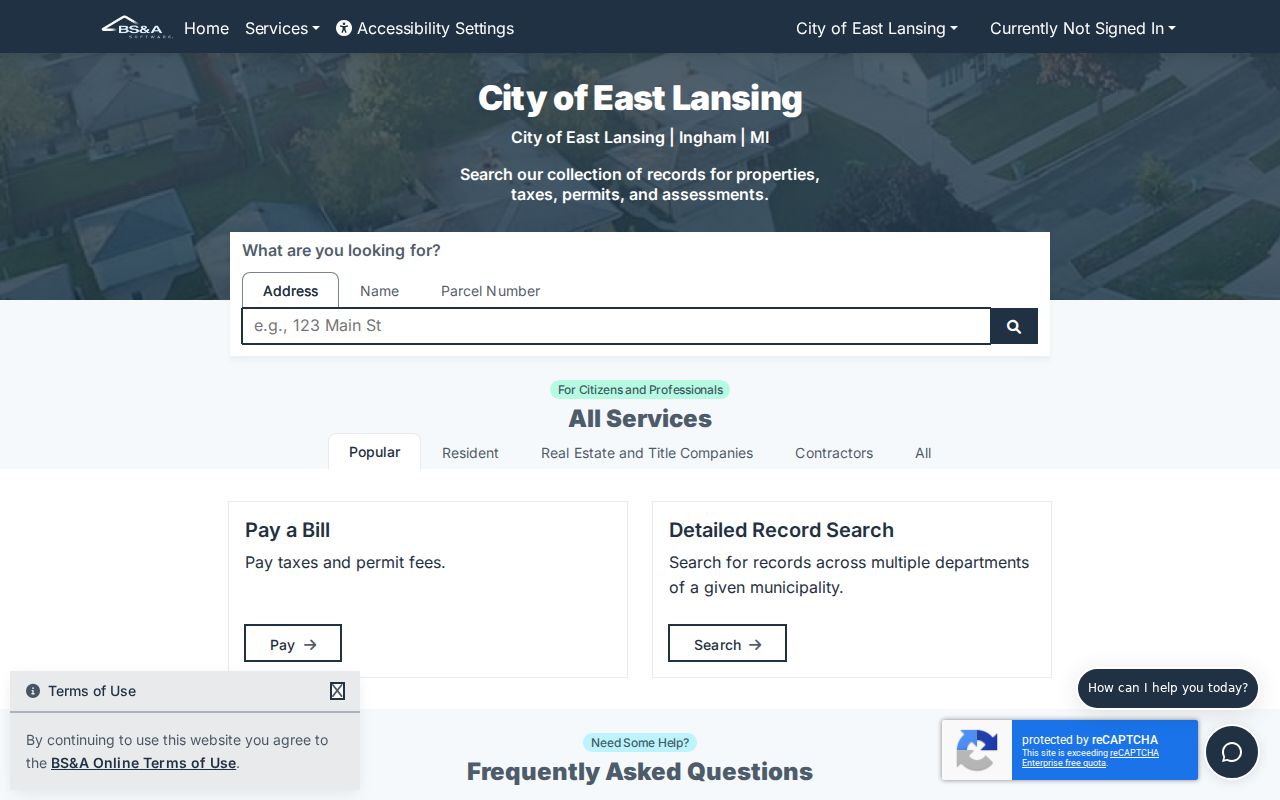
The property search is a parcel and owner tool, so the displayed result should be read alongside a map or recorded document when a name matters.
East Lansing Deed Index Dates
The Ingham deed index supplies the land-record part of an East Lansing residents directory search. Direct Search is a free index for 1956 to the present, except for the most recent seven days. The county describes online images from 1956 forward, while Tapestry describes images from 1960 forward and charges $8.95 per search plus $1 per image page. The same record can also be requested by mail or located in person. A grantor conveyed an interest; a grantee received it. Those roles make the backward chain possible.
The important gap is quality, not simply age. The office warns that converted index data from 1956 through 1981 can have discrepancies and directs researchers to the Mason vault for verification. Documents recorded before 1960 require a vault appointment. Mail copy requests go to Register of Deeds Copies, P.O. Box 195, Mason, MI 48854, with a name or property description, book/page or document number, and $1 per page.
The Ingham Records Online page explains the index, vault, and copy routes. Its free index, paid image option, county copy route, and vault route should be chosen by document date and the purpose of the search.
Current East Lansing Resident Directories
Current East Lansing resident information is split by purpose. The assessor identifies property ownership and correspondence fields. The voter system is for a named registration query, not a street-wide household roster. Recorded deeds identify parties to property transactions. Court results identify parties to public cases, subject to exclusions and court rules. Each record becomes more useful when it is matched to a date, a parcel, and a second independent source.
| Source | Who It Lists | Keeper | Access |
|---|---|---|---|
| BS&A property record | Current parcel owner and tax-card details | East Lansing Assessing | Free name, address, or parcel search |
| Michigan voter lookup | A named voter-registration match | Michigan Department of State | First name, last name, birth month, and birth year |
| Fidlar deed index | Grantors, grantees, and recorded land instruments | Ingham Register of Deeds | Free index with image and counter options |
| MiCOURT and 54-B files | Parties and public case activity | 54-B District Court | Online result plus clerk request |
| QVF request | Authorized voter-file fields for a chosen scope | Michigan Bureau of Elections | Written request and protected-field limits |
Use the property record for a land question and voter data only for a registration question. A court docket is not a current-address record. The one-person comparison sequence is set out in the East Lansing resident lookup section of the directory.
East Lansing Voter Record Limits
Michigan’s voter record is public under state law, but it is deliberately limited. The Michigan Voter Information Center asks for a first name, last name, birth month, and birth year. Its purpose is to help a named voter find registration, clerk, polling-place, ballot, and tracking information. The public record and a Qualified Voter File request can include a complete name, residential or mailing address when available, year of birth, registration date, status, and voter history. Voter history shows participation, not ballot choices.
Driver-license or state-ID numbers, birth month and day, phone numbers, email addresses, digitized signatures, and the last four digits of a Social Security number are protected. A jurisdiction, ward, or precinct request is not a guarantee that every person at an address is registered or current. Protected voters and Address Confidentiality Program participants must never be reverse-engineered.
Michigan Voter Information Center is the official named-voter route.
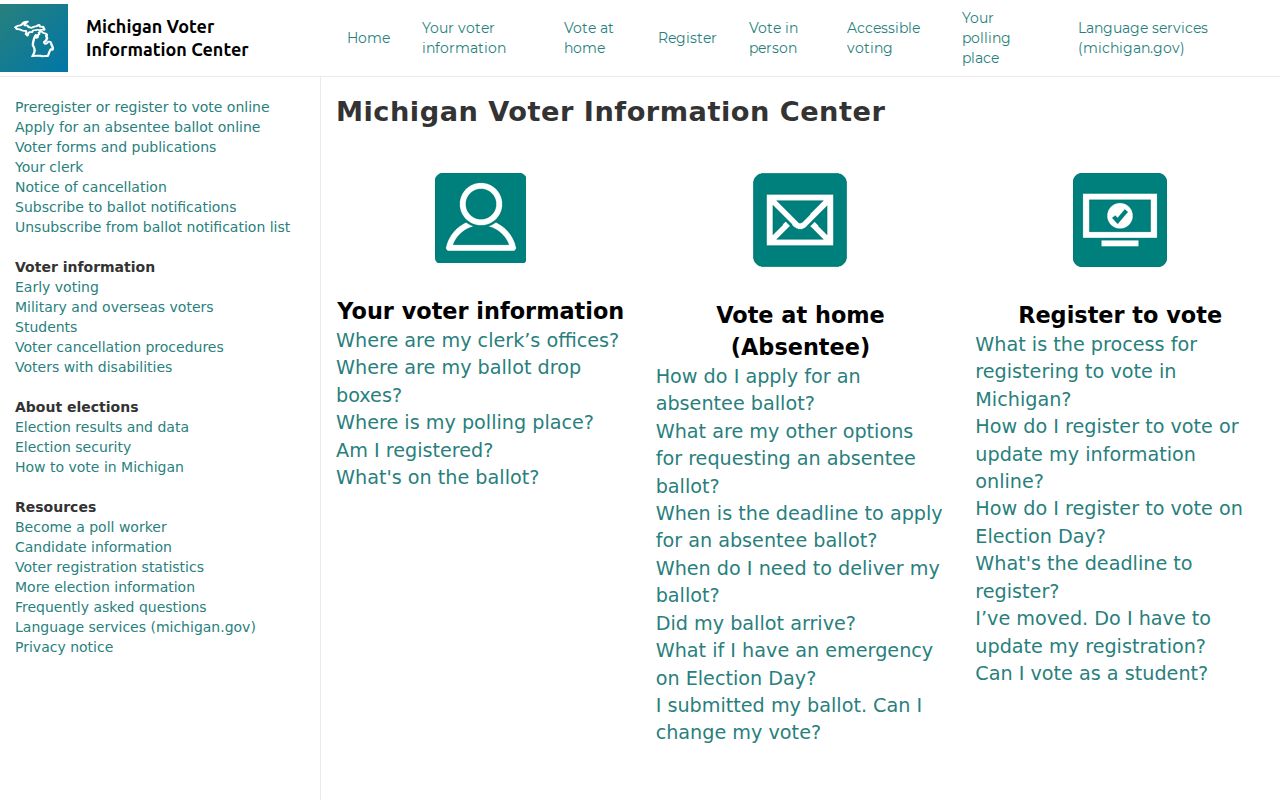
The form’s required name and birth-month/year inputs help distinguish similarly named voters without exposing a full birth date.
East Lansing Court Record Checks
When a public case is relevant to a named person, start with MiCOURT’s East Lansing 54-B route and preserve the court, case number, participant role, filing date, case type, and disposition. The portal is informational rather than the official file. Some categories are excluded, including adoption, juvenile, mental-health, protected family, and other nonpublic matters. Some criminal display rules also limit what appears online. A name result by itself is not a reliable identity match in a university city.
54-B District Court is at 101 Linden Street. A specific party name or case number can be used on the File/Copy Request Form. Up to five pages are provided within one hour at $1 per page; larger requests take reasonable time. Certified copies are $10 plus $1 for each subsequent page. Public inspection is free when the file is not restricted. The clerk cannot provide driving records, LEIN printouts, or a general criminal history.
The 54-B MiCOURT search is the public starting point.
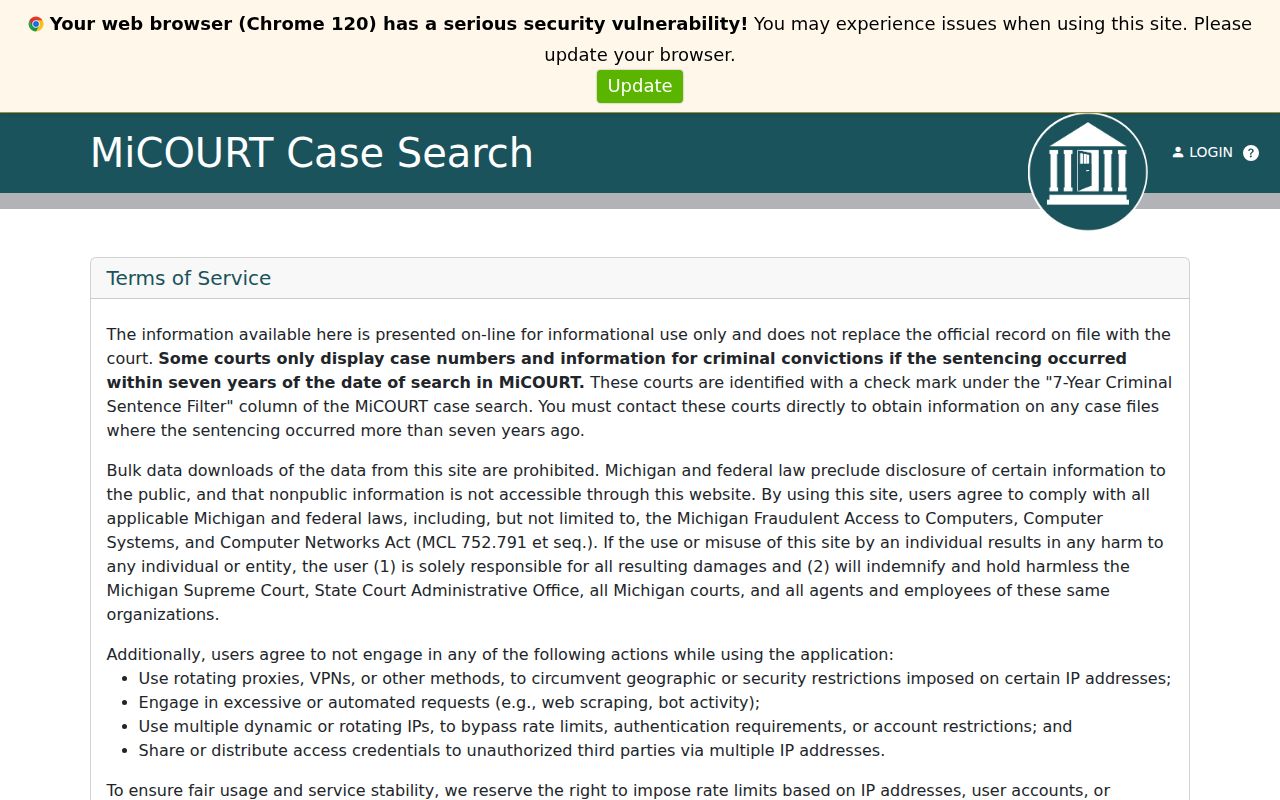
Confirm an online result with the court clerk before treating it as an official case record or using it to distinguish people with the same name.
East Lansing Vital Record Gates
Vital records are not ordinary Freedom of Information Act records. Ingham County keeps births and deaths from 1867 and marriage records from 1837 for the events within its jurisdiction. The Michigan Department of Health and Human Services keeps statewide birth, death, marriage, and divorce records from 1867. An event recorded in East Lansing’s Clinton County portion belongs with the proper county clerk, not automatically with Ingham.
Birth copies have eligibility rules under MCL 333.2882. Death and marriage copies generally have a broader written-request route with payment, subject to exceptions. Ingham permits genealogical visual review for death and marriage records at least 75 years old and birth records at least 110 years old. State birth records at least 100 years old are unrestricted. An index or verification can suggest a record exists; it is not the same thing as a certified copy.
Michigan vital-record ordering lists the state channels.
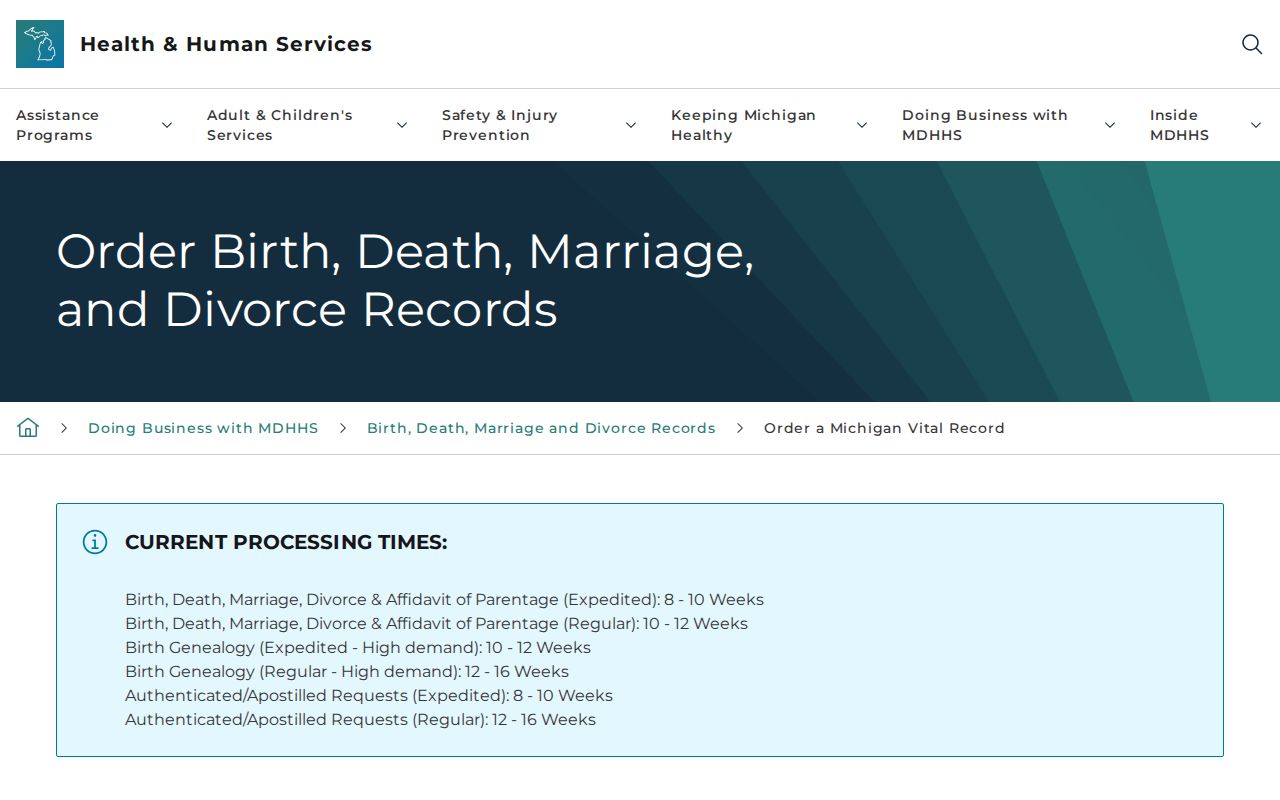
The state ordering route complements the county clerk and gives a cross-check when the event county is uncertain.
East Lansing FOIA Request Route
Michigan Freedom of Information Act, 1976 PA 442, MCL 15.231 through 15.246, applies to existing nonexempt records held by public bodies. A written request should identify the record, date range, office, and search terms. The normal response is five business days after legal receipt, with a possible ten-business-day extension. Permitted costs can include search, review, separation, copying, and mailing under MCL 15.234. A request cannot force an office to create a person profile.
Route city general records through the East Lansing Clerk or the city FOIA channel, police materials through Police Records, election questions through the clerk or Bureau of Elections, court copies through the court clerk, and deeds through the Register of Deeds copy process. Vital records follow their separate statutory forms.
Michigan Attorney General FOIA guidance describes the statewide timing and request rules.
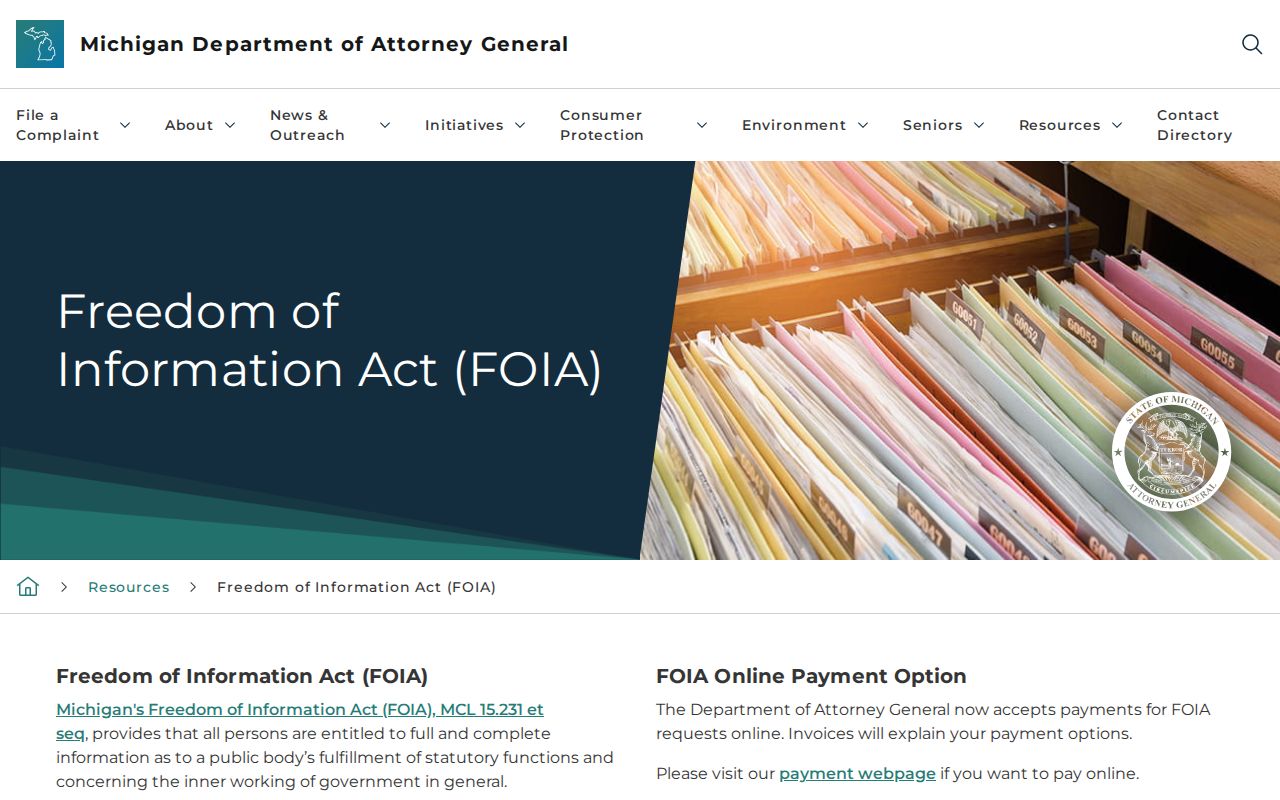
Using the right custodian and a narrow description reduces delays and avoids asking an office for records it cannot lawfully release.
Historical East Lansing Resident Directories
Historic resident trails use a different set of sources. CADL’s Lansing-area directory guide identifies print directories from 1867 forward and street-address listings from 1906 forward. Its early PDFs include 1867, 1873, 1878, 1883, 1894, and 1904. The regional runs include Lansing and East Lansing volumes from 1928 through 1941, R. L. Polk volumes beginning in 1945, and a 1972 to 1996 cross-index inventory with a 1974 to 1975 gap. A directory entry is a dated publication snapshot, not proof of current occupancy.
CADL Forest Parke Library and Archives, at 401 S. Capitol Avenue in Lansing, is the main reference shelf. It can be paired with a 1950 or earlier census schedule, newspaper microfilm, an obituary, probate, and the deed chain. Full collection dates, publisher runs, and entry-reading practices are gathered on the East Lansing city directory page.
East Lansing Records Across Boundaries
East Lansing grew around Michigan Agricultural College, was chartered in 1907, and later expanded through annexation and 425 Agreements. Its present geography includes a small Clinton County portion and a substantial MSU campus area. A record may therefore use East Lansing, Lansing, Agricultural College, Collegeville, a township label, or a campus reference. Postal labels and neighborhood names are useful clues, but the city GIS boundary, parcel legal description, and the date of the record determine the jurisdiction.
The address itself can change across time. CADL documents three Lansing-area numbering systems: an early 1867 to 1883 format without block divisions, an 1885 to 1905 system with directional names and 100/200 blocks, and the Philadelphia/block plan adopted in 1906. There is no complete public cross-reference key. Sanborn maps are the safer bridge between an old number, an intersection, and a modern parcel.
East Lansing Clerk and Election Access
The East Lansing City Clerk coordinates city documents and elections, while Ingham County’s Elections Division handles countywide administration. The county election office is at the Mason Courthouse, 341 S. Jefferson Street, and lists (517) 676-7255 for Elections. City and county clerks can direct a requester to the proper precinct, jurisdiction, or record route. A change of address submitted through the Secretary of State updates the driver license or ID and voter record, while the local clerk remains the in-person route close to an election.
For older voter research, the Archives of Michigan’s Ingham guide lists canvassers’ returns from 1891 to 1933 and 1934 to 1968, county election registers from 1838 to 1968, and early Lansing registration books. Those holdings are historical jurisdiction records, not a promise of a complete East Lansing address list.
The East Lansing City Clerk provides the municipal point of contact.
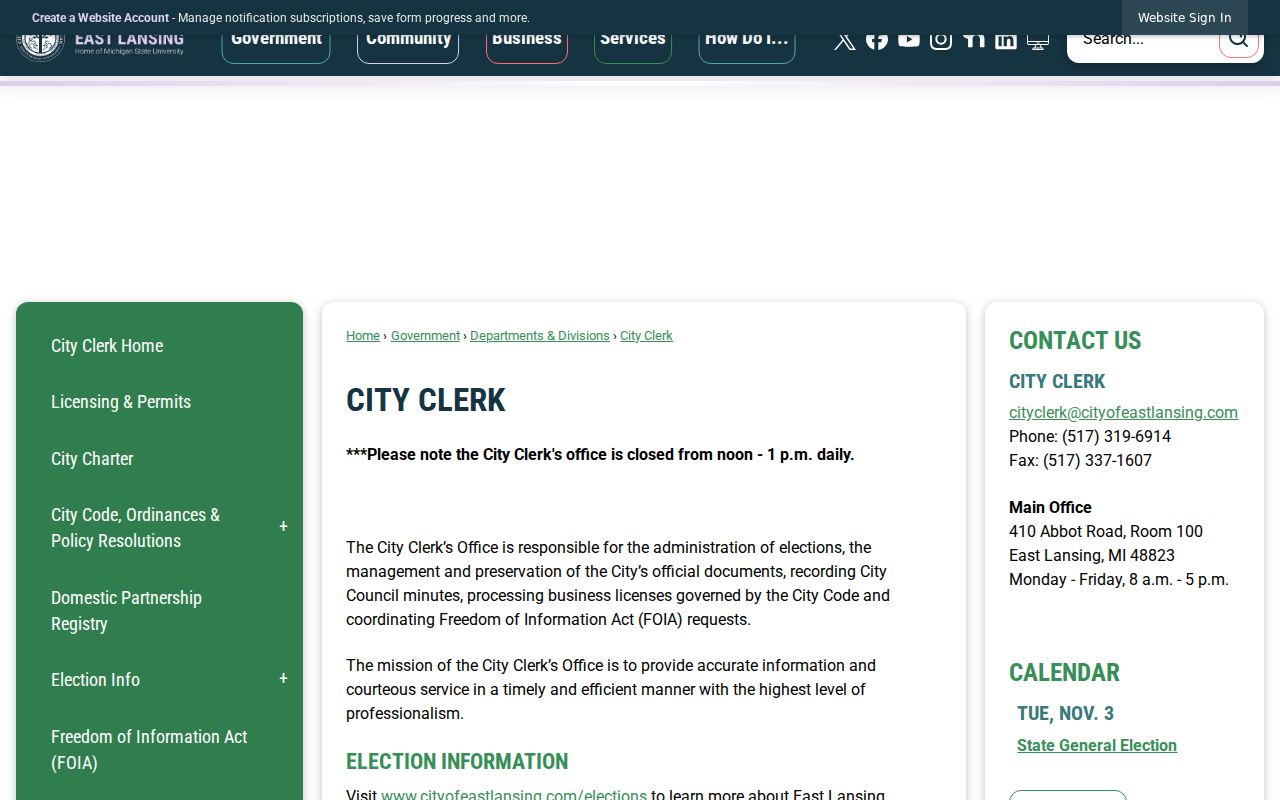
City Clerk information is most useful for local election and municipal-record routing, while the state voter tool remains the public named lookup.
Ingham County Elections publishes the county election contact path.
The county election office can help identify the right election-record channel without turning a public registration record into a household profile.
East Lansing Resident Privacy Boundaries
Publicly searchable does not mean safely publishable. Michigan’s Address Confidentiality Program provides a designated address and mail forwarding for eligible people at risk of harm. Court files may be sealed or nonpublic, voter data has protected fields, vital records have their own access law, and motor-vehicle data is restricted by the federal Driver’s Privacy Protection Act. When a result points to a protected person or a substitute address, stop the search rather than joining fragments from unrelated records.
Lawful personal use. East Lansing public records can support family history, estate research, civic questions, and checking an official record, but never stalking, harassment, intimidation, or harm.
Commercial people-search services can mix public filings with marketing data and old addresses. Their matches may be stale or combine people with similar names. The official custodian, source date, and record number are the safer basis for any fact that matters.
Note: A voter, parcel, court, or directory hit identifies a record at a point in time, not a complete statement about a person’s present circumstances.